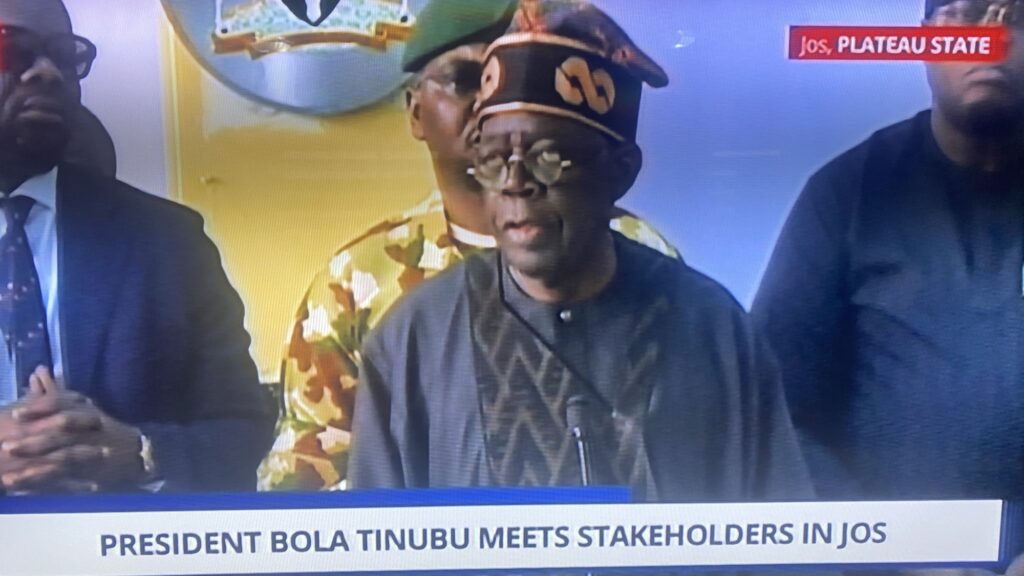

For 25 years after Nigeria’s return to democracy in 1999, calls for “restructuring” were tied to one demand: a national conference. But the administration of President Bola Ahmed Tinubu is charting a different path pushing major constitutional, fiscal, and institutional reforms through legislation, court action, and policy shifts.
Public affairs commentator Ugoji Maximillian, in a widely shared June 2026 analysis titled “State Police: How Tinubu Is Restructuring Nigeria Without a National Conference”, argues that the changes amount to the most extensive devolution of power in a generation.
Here are 8 key areas highlighted in the report:
1. State Police: A New Security Architecture
On June 24, 2026, the Senate passed a constitutional amendment bill to establish state police. The bill proposes a dual policing system: states can set up their own police services with defined safeguards, while the Nigeria Police Force retains responsibility for national security.
Proponents have called it the most significant security restructuring since 1999. Previous governments discussed the idea, but critics warned of possible misuse by state executives. The new bill, according to Maximillian, includes “safeguards against political abuse.”
2. Local Government Financial Autonomy
For decades, many local government councils relied on the Joint Account system, which gave state governors significant control over council funds.
Under Tinubu, the Federal Government supported legal efforts that strengthened direct remittance to LGAs. The shift is aimed at allowing funds to reach councils without passing first through state accounts a move described as empowering grassroots governance.
3. A Comprehensive Tax Overhaul
In 2025, four major tax laws were signed: the Nigeria Tax Act, Nigeria Tax Administration Act, Nigeria Revenue Service Act, and Joint Revenue Board Act.
The reforms seek to simplify tax collection, reduce overlapping levies, and improve ease of doing business. Under the new framework, small businesses with annual turnover up to ₦100 million now have broader tax exemptions.
4. Oil Revenue Remittance Changes
In 2026, the administration directed that all government oil and gas revenues be remitted directly into the Federation Account. The directive reduces retention arrangements that previously allowed deductions before remittance, a practice critics said limited transparency in oil income distribution.
5. Fuel Subsidy Removal
Fuel subsidy was removed on the first day of the Tinubu administration, ending a policy successive governments had debated for years. The government said the move would free trillions of naira for infrastructure and state allocations, though it also led to immediate economic pressure on households and businesses.
6. Electricity Decentralisation
The Electricity Act now allows states to generate, transmit, and distribute electricity within their territories. Previously, power was largely centralized under federal control. States can now create independent electricity markets and attract private investment into the sector.
7. Regional Development Commissions
Six new regional development commissions covering North West, North East, North Central, South East, South, and South West have been established. The commissions are designed to coordinate region-specific development planning alongside federal ministries.
8. Higher FAAC Allocations to States
Following subsidy removal and exchange-rate reforms, Federal Account Allocation Committee, FAAC, distributions to states rose significantly compared to previous years. The increase has reduced a long-standing argument that the federal government starves states of resources.
‘Reforms Many Had Demanded’
Maximillian notes that many of these issues have been central to Nigeria’s governance debate for years. “If we’re honest, we would know that these issues he’s handling have been the major issues limiting Nigeria,” he wrote, adding that some critics of the administration had previously called for similar reforms.
The administration has not described its approach as “restructuring.” Officials say the changes are targeted constitutional amendments and policy reforms to improve efficiency, security, and fiscal management.
Whether described as restructuring or reform, the cumulative effect is a shift in how power, money, and responsibility are distributed across Nigeria’s federal system and without convening a national conference.