
Global fuel markets are facing renewed uncertainty after Iran announced the indefinite closure of the Strait of Hormuz following a fresh round of military confrontations with the United States.
The strategic waterway, which handles a significant share of the world’s crude oil and liquefied natural gas shipments, has become the latest flashpoint in the growing conflict between Washington and Tehran. Analysts warn that any prolonged disruption along the route could trigger another spike in global crude oil prices, with motorists and businesses likely to feel the impact through higher fuel costs.
US Launches New Military Strikes
The latest escalation began after the United States carried out another series of military strikes on Iranian targets, accusing Tehran of attacking a commercial vessel transiting the Strait of Hormuz.
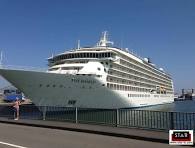
According to the US Central Command (CENTCOM), the targeted ship—a Cyprus-flagged cargo vessel identified as the MV GFS Galaxy—suffered extensive damage to its engine compartment after the alleged attack, leaving it unable to continue its voyage. US officials also reported that one civilian crew member was unaccounted for following the incident.
British maritime authorities later confirmed that the ship’s crew abandoned the vessel and evacuated in lifeboats after the attack.
US Defense Secretary Pete Hegseth defended the military action, stating that Iran had ignored repeated warnings following previous attacks on commercial shipping.
Iran Announces Indefinite Closure of Strait of Hormuz
In response to the American strikes, Iran’s Islamic Revolutionary Guard Corps (IRGC) declared that the Strait of Hormuz would remain closed until further notice.
Iranian state media reported that the decision followed an encounter with a vessel that allegedly ignored instructions issued by Iranian naval forces while sailing through the strategic passage.
The IRGC also warned that any further military action by the United States or its allies would provoke a stronger response, including strikes against additional military installations across the region.
Iranian Retaliation Expands Across the Region
Iran quickly responded to the latest US offensive by launching missile and drone attacks against American military assets and allied facilities in the Middle East.
Iranian authorities claimed that one of the primary targets was the Prince Hassan Air Base in Jordan, where they alleged command facilities and drone infrastructure were destroyed.
Reports also indicated that Gulf nations, including the United Arab Emirates, Qatar and Bahrain, activated their air defense systems following incoming missile and drone threats.
The latest exchange comes only days after several commercial oil tankers were attacked while navigating routes recommended by the United States through Omani waters. Iran has consistently maintained that vessels should instead transit routes it considers secure.
Shipping Security Under Fresh Threat
The Strait of Hormuz remains one of the world’s most strategically important maritime corridors, linking Gulf oil producers with international markets.
Any disruption to shipping through the narrow passage has immediate implications for global energy supplies, insurance costs, freight charges and petroleum prices.
Industry observers caution that if the closure continues for an extended period, oil-importing countries could experience increased inflation driven by higher transportation and energy costs.
Diplomatic Efforts Continue Despite Rising Tensions
Although military exchanges have intensified, diplomatic efforts have not completely collapsed.
US President Donald Trump stated that negotiations with Iran were still expected to continue through international mediators despite declaring that recent Iranian attacks had effectively ended an earlier ceasefire arrangement.
Iranian Foreign Minister Abbas Araghchi, however, accused Washington of violating previous agreements and escalating the conflict.
American officials are reportedly pressing Tehran, through diplomatic channels, to publicly guarantee that the Strait of Hormuz will remain open to international shipping and to halt attacks on commercial vessels.
New Iranian Supreme Leader Calls for Revenge
The latest developments also come amid heightened emotions in Iran following the death of former Supreme Leader Ali Khamenei during an airstrike earlier this year.
His successor, Ayatollah Mojtaba Khamenei, used his first major public address to pledge retaliation, describing revenge as the will of the Iranian people.
He vowed that those responsible for the deaths of Iran’s leaders and military personnel would face consequences, insisting that the country’s response would continue regardless of changes in leadership.
Meanwhile, reports from recent funeral ceremonies showed demonstrators carrying anti-American slogans and demanding retaliation against US President Donald Trump.
US media outlets have also reported claims that Israel shared intelligence with Washington alleging an Iranian plot against Trump, although the former president has dismissed suggestions that the threat was new, saying he has remained a target for years.
Global Markets Watching Closely
Energy traders, shipping companies and governments are now closely monitoring developments around the Strait of Hormuz.
With nearly one-fifth of the world’s oil trade passing through the waterway, any prolonged closure could send crude oil prices significantly higher, potentially leading to increased petrol and diesel prices in countries heavily dependent on imported fuel.
The coming days are expected to determine whether diplomatic efforts can prevent a broader regional conflict or whether further military escalation will deepen disruptions to global energy markets.